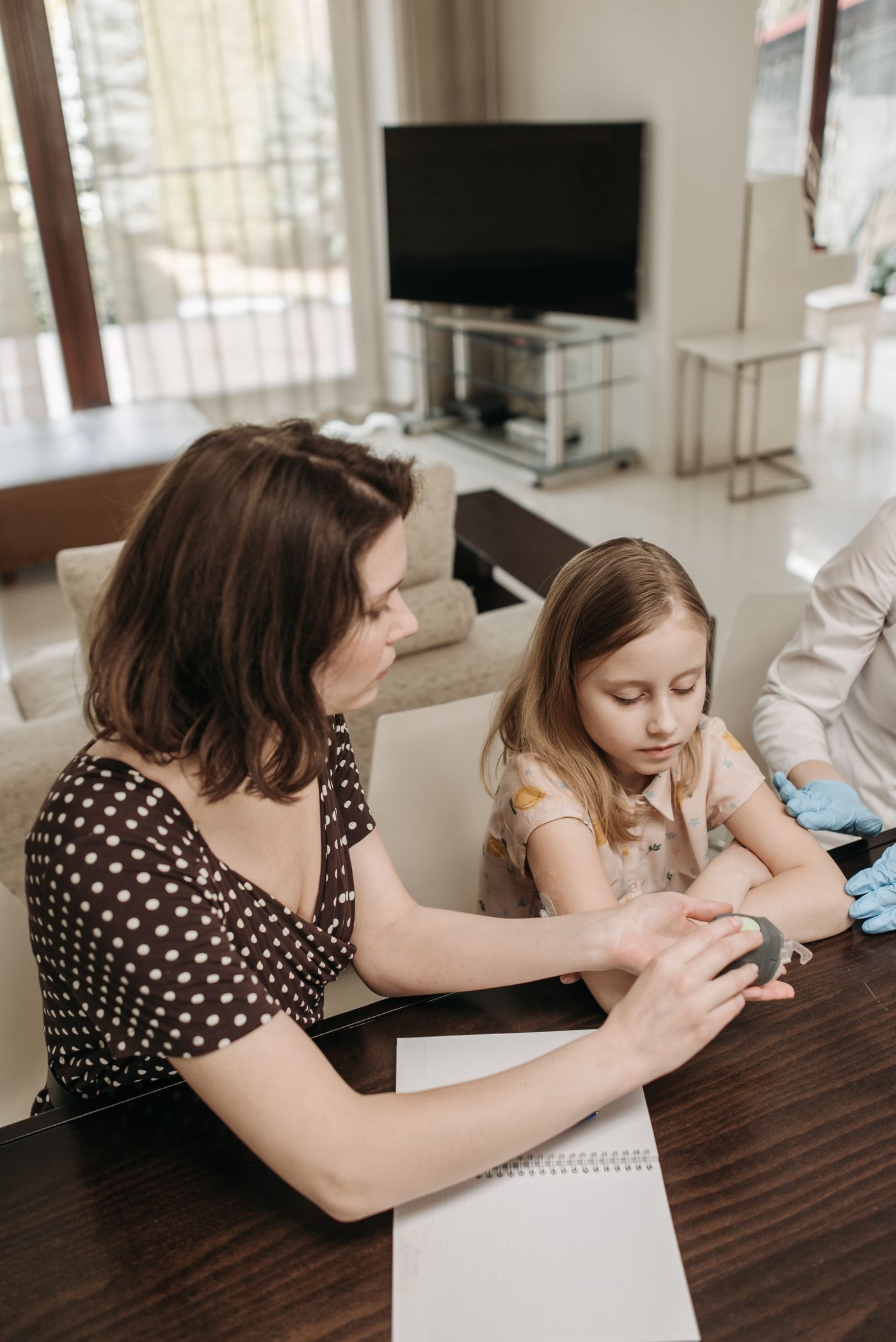
You know your child's cues better than any monitor.
You catch the cough that means something before it turns into something worse. That instinct keeps your child safe every day. But no parent can carry that weight alone, hour after hour, without rest. HomeLogics Healthcare brings trained pediatric nurses into your Atlanta home.
Our team works beside you, not in place of you. They handle the medical tasks. You get to be a parent again, not just a caregiver. Many families reach us right after discharge from Children's Healthcare of Atlanta at Egleston or the Scottish Rite campus. Coming home can feel like a cliff edge. We build the plan before your child leaves the hospital bed.
✓ $0 out-of-pocket for eligible families · Approval typically within 30 days
A licensed RN or LPN for your child's plan — every single shift.
GAPP & Georgia Medicaid cover eligible families in full.
We start the plan before your child leaves the hospital bed.
One or two nurses per case who learn your child's normal fast.
Care at home — no waiting rooms
With their own sounds and their own routine. So we bring the nurse to you. A licensed RN or LPN arrives ready for your child's specific care plan.
We provide one-on-one skilled nursing plus personal care support for daily needs. Your child's physician writes the orders. Our nurses follow them on every single shift.
We reach families in Buckhead, Decatur, Sandy Springs, and Dunwoody. We also serve homes near the Perimeter and along Peachtree Street. No waiting rooms. No transport vans. Just care at home.
The first visit is mostly listening
Your assigned nurse reviews your child's chart before arriving. She meets your child at their pace, not on a clock.
She asks questions a hospital visit never has time for, like which position eases your child's breathing best or what calms them during a feeding.
That first visit shapes the entire care plan around your home and your child's actual routine.
If your child's needs go past basic assistance, skilled nursing is the level of care Georgia Medicaid and GAPP are designed to cover.
A home health aide supports daily tasks like:
Our RNs and LPNs handle hands-on medical care, all under a doctor's written orders:
Not every diagnosis calls for a nurse in the home. Some clearly do. The decision comes down to daily medical need, not a single diagnosis on paper. In-home nursing often makes daily life safer if your child:
Has been readmitted to the hospital more than once this year
Relies on equipment like a ventilator or feeding pump
Sees three or more specialists regularly
Whatever your child's doctor orders, our nurses follow it precisely. Through GAPP, we support a wide range of complex pediatric needs.
We also care for children with hydrocephalus, spina bifida, and genetic differences including Down syndrome. Our team manages muscular dystrophy cases and provides respiratory support for tracheostomy care, ventilator dependence, and enteral feeding through G-tubes. For background on many of these conditions, the American Academy of Pediatrics offers reliable, parent-friendly information.
GAPP, the Georgia Pediatric Program, is how most metro Atlanta families get nursing hours covered at home. It combines skilled nursing with caregiver support for medically fragile children under 21. If this program is new to you, you don't have to figure out the paperwork by yourself.
We guide Fulton, DeKalb, and Cobb County families through enrollment step by step, alongside their Georgia Medicaid coverage.
GAPP hours vary by child. Georgia Medicaid approves a set number of nursing hours based on documented medical need, reviewed by a case manager. Some children qualify for part-time coverage. Others qualify for around-the-clock care.
Two things usually decide eligibility: a doctor's written order showing medical necessity, and active Georgia Medicaid coverage. We review your eligibility with you before the first visit, so you know exactly what's covered before care ever starts.
We help you document your child's needs clearly during the assessment, because a well-documented case tends to result in better-matched hours.
The details that pull at your attention — supplies, scheduling, the hard nights — are the ones we quietly take off your plate.
Running low on formula, feeding bags, or trach supplies is stressful, especially at midnight. Our nurses track your child's monthly usage and place reorders ahead of time. That means fewer errands across town on I-285 and one less thing pulling at your attention.
Most Atlanta families start care within days of discharge from Egleston, Scottish Rite, or another area hospital. We connect with your discharge planner while your child is still admitted, so the move home doesn't stall on paperwork. Exact timing still depends on physician orders and nurse availability.
Children do better with familiar faces at the bedside. Constant staff turnover means relearning your child's routine every week, and that costs time you don't have to spare. We prioritize keeping the same one or two nurses assigned to each case. They learn your child's normal fast, and they notice just as fast when something's off.
If your scheduled nurse calls out, our care coordinator works to fill the shift with someone already familiar with your child's file. Not a stranger reading it cold for the first time. We keep backup nurses briefed on active cases across Atlanta, Marietta, and East Point, specifically so gaps stay rare and short.
Medical worry doesn't check the clock. When you call our Atlanta line, someone who already knows your child's case answers. Not an automated menu, not a call center reading from a script. That matters most on the nights that are hardest to get through.
Every nurse on our team passes a background check, a skills verification, and hands-on training in pediatric ventilator and trach care before taking a case. We don't place a nurse in your home who has only worked with adult patients. Pediatric complex care is a distinct specialty, and we staff it that way.
Every family receives a written emergency plan before care starts. It covers common situations, like a dislodged trach tube or a seizure that runs long, and it spells out exactly when to call 911 versus our nurse line. Our nurses document every incident as it happens, so your child's full care team always knows what occurred.
We confirm your specific benefits before your first visit, so nothing surprises you once care begins.
In most cases, yes. Georgia Medicaid, through GAPP, covers nursing hours and personal care support for children who qualify. We confirm your specific benefits first, then handle the enrollment forms with you, so nothing surprises you once care begins.
Yes. Most Atlanta families we serve use Georgia Medicaid through GAPP, but we also work with private insurance and can bill both when a child has dual coverage. We check your plan's pediatric home health benefit before your first visit, so you know your costs upfront.
Two things usually decide eligibility: a doctor's written order showing medical necessity, and active Georgia Medicaid coverage. We review your eligibility with you before the first visit, so you know exactly what's covered before care ever starts.
GAPP hours vary by child. Georgia Medicaid approves a set number of nursing hours based on documented medical need, reviewed by a case manager. Some children qualify for part-time coverage. Others qualify for around-the-clock care. We help you document your child's needs clearly during the assessment, because a well-documented case tends to result in better-matched hours.
Our nurses travel I-285, the Downtown Connector, and Georgia 400 daily.
We reach families in Midtown, Grant Park, and East Atlanta, along with Marietta, Decatur, and Sandy Springs. Fulton, DeKalb, Cobb, and Gwinnett counties all fall within our coverage.
Coverage beyond the city: Yes. We support families throughout the wider metro region, including Alpharetta, Roswell, and College Park near Hartsfield-Jackson. Ask us about your specific address when you call.
We build the plan before your child leaves the hospital bed — and we're on the line at 2 AM when the nights are hardest to get through. Reach a real person who already knows your child's case.